
Devotional
Romans 8:28 Devotional: What This Verse Does and Doesn't Promise
Romans 8:28 promises that God works all things together for the good of those who love him. It does not promise that every event is good, or that life will turn out the way you planned. Paul defines the good in the very next verse: becoming like Christ. And he makes the promise inside a chapter full of suffering.
Say you are standing in a hospital hallway with a family whose father did not wake up from surgery. Someone means well and says, "Well, all things work together for good." The words are from the Bible, but they land wrong in that hallway. You can see it on the daughter's face.
Many pastors have watched this verse land wrong. Many of us have also clung to it on a bad night. So it is worth reading slowly, in its place.
What does Romans 8:28 say?
Romans 8:28 says that God works all things together for good for those who love him and are called according to his purpose.
And we know that God works all things together for the good of those who love Him, who are called according to His purpose. (Romans 8:28, BSB)
Notice the subject of the sentence. God is the one at work in what happens to his people. Paul is describing a person, not luck or the way life tends to even out.
Notice also the words "all things." Paul does not leave out the hard ones. If the promise covered only the pleasant parts of life, it would not need to be made.
What is Romans 8 about?
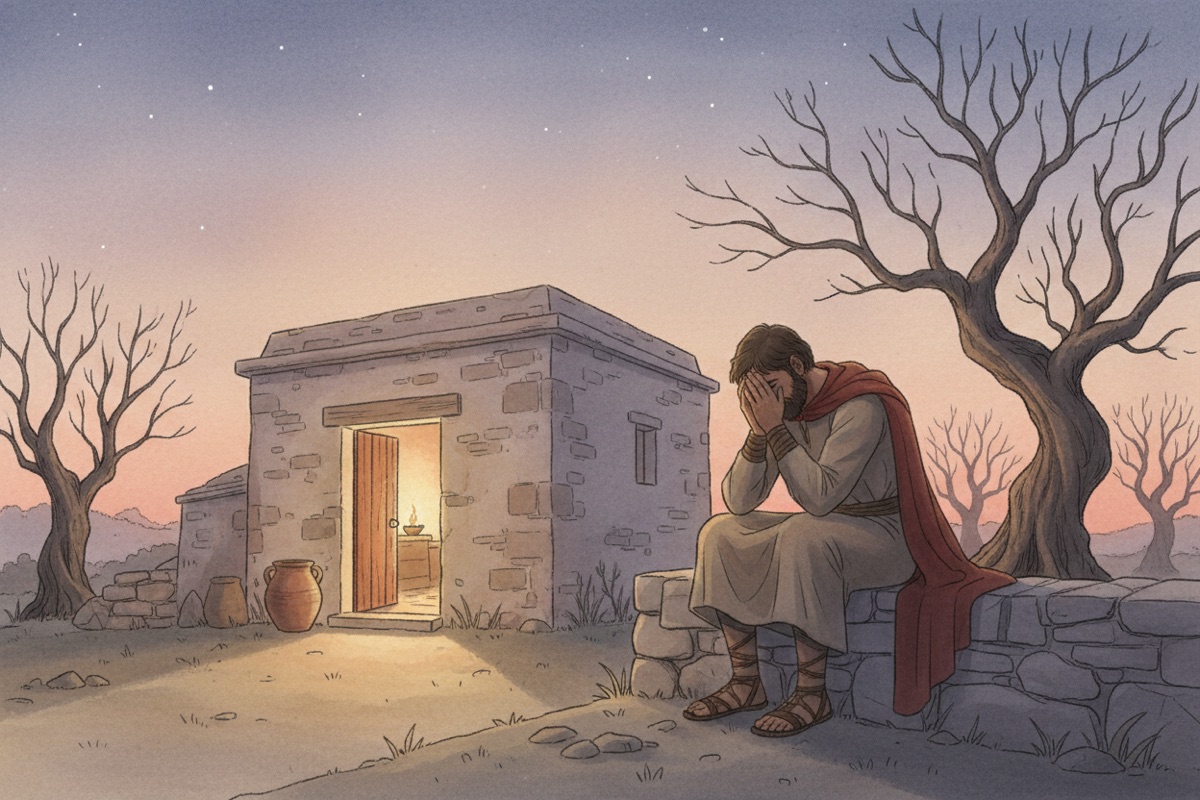
Romans 8 is about life in the Spirit for people who still suffer. Paul does not write verse 28 to people with easy lives. Ten verses earlier he says, “I consider that our present sufferings are not comparable to the glory that will be revealed in us” (Romans 8:18, BSB). He calls them sufferings and does not pretend otherwise.
Then he describes a world in pain. “We know that the whole creation has been groaning together in the pains of childbirth until the present time” (Romans 8:22, BSB). And he includes believers in it: “we ourselves, who have the firstfruits of the Spirit, groan inwardly as we wait eagerly for our adoption as sons, the redemption of our bodies” (Romans 8:23, BSB).
Just before verse 28, he admits we do not always know what to ask for. “For we do not know how we ought to pray, but the Spirit Himself intercedes for us with groans too deep for words” (Romans 8:26, BSB).
So the order matters. Groaning comes first, then weakness, then the Spirit praying for us with groans too deep for words. Only then does Paul say, "And we know." The promise comes to people who are still groaning.
What is the good in Romans 8:28?
The good is likeness to Christ, and Paul names it in the next sentence.
For those God foreknew, He also predestined to be conformed to the image of His Son, so that He would be the firstborn among many brothers. (Romans 8:29, BSB)
This is where we often misread the verse. We hear "good" and fill in our own picture: the job returns, the scan comes back clear. God may give those things. But that is not what Paul promises here. He promises that God will use all things to make his people like his Son.
That is a deeper promise than the one we usually want. It means a loss you would never choose can still be used to shape you into the image of Christ. It does not mean the loss was secretly fine.
What does Romans 8:28 not promise?
Romans 8:28 does not promise that every event is good, that you will understand the reason, or that the outcome will be the one you prayed for.
The verse does not call evil good. Paul says God works all things together for good, not that all things are good. Joseph could say to his brothers, “what you intended against me for evil, God intended for good” (Genesis 50:20, BSB). He did not pretend their evil was good. He named their intent as evil and said God had intended it for good.
The verse does not promise you will see the reason in this life. A few verses earlier Paul says that “hope that is seen is no hope at all” (Romans 8:24, BSB). We wait for what we do not yet see.
And the verse is not a sentence to say quickly to someone in pain. Paul wrote about groaning and weakness before he wrote it. We can give people at least that much room too.
What does Romans 8:28 mean for you this week?
It means you can carry the hard thing in front of you without needing it to make sense yet. You know who is working in it, and you know what he is working toward.
If you are the one grieving, you do not have to call your loss good. You can groan, and you can admit you do not know how to pray. Paul says the Spirit helps in exactly that weakness. Then you can hold on to what the chapter ends with: nothing “will be able to separate us from the love of God that is in Christ Jesus our Lord” (Romans 8:39, BSB).
If you are the one in the hallway with a grieving family, let the verse shape how you stay, more than what you say. Stay with them and pray, and let them groan. The promise is true whether or not you say it out loud in the first hour.
If you preach this verse soon, read it with verses 18 through 39 around it. Your people need the whole chapter around the verse.

A prayer
Father, you know what I am carrying today, and you know the people I carry with me. I do not always see how you are working. Some days I do not know how to pray. Thank you that your Spirit helps me in that weakness. Work in all of this to make me more like your Son. Keep me from using your promises to hurry past other people's pain. Hold me, and hold them, in the love of Christ that nothing can break.
Questions for reflection
- Where in your life right now do you most want Romans 8:28 to mean "this will turn out the way I hope"?
- How might reading verses 18 through 39 change the way you speak to someone who is grieving this week?
Try Sermoneer
One sermon becomes a week of material: small group guide, devotional, social cards, and shorts.
Start free