
Devotional
Psalm 23 Devotional: The Lord Is My Shepherd for a Hard Week
Psalm 23 makes no promise that a hard week will turn easy. What it offers is company. The shepherd leads you to rest, walks with you through the dark valley, and sets a table while the trouble is still in the room. In a hard week, the psalm puts someone beside you in the dark.
You know the kind of week. The phone rang late on Tuesday. By Thursday you are tired in a way that sleep does not fix, and the things you usually say to other people sound thin when you say them to yourself.
Psalm 23 fits weeks like that. It is short enough to memorize and old enough to have been prayed at a great many bedsides. Read it slowly.
What does Psalm 23 say?
Here is the whole psalm in the Berean Standard Bible.
The LORD is my shepherd;
I shall not want.
He makes me lie down in green pastures;
He leads me beside quiet waters.
He restores my soul;
He guides me in the paths of righteousness for the sake of His name.
Even though I walk through the valley of the shadow of death,
I will fear no evil, for You are with me;
Your rod and Your staff, they comfort me.
You prepare a table before me in the presence of my enemies.
You anoint my head with oil; my cup overflows.
Surely goodness and mercy will follow me all the days of my life,
and I will dwell in the house of the LORD forever. (Psalm 23:1-6, BSB)
The first line is personal. David names whose sheep he is.
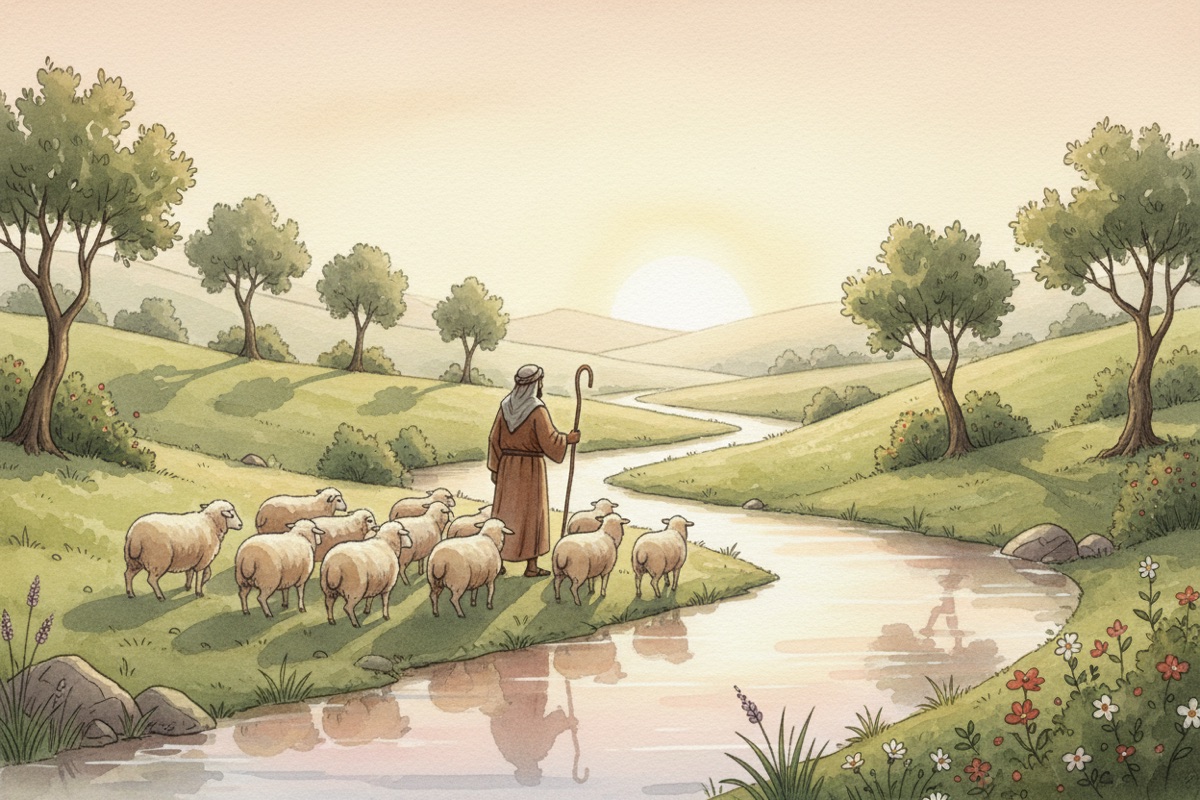
What did "the Lord is my shepherd" mean to its first readers?
To David's first readers, a shepherd was a person who was fully responsible for animals that could not take care of themselves. Sheep need to be led to water and grass. They need someone to stand between them and what wants to eat them. David knew this work firsthand. Scripture introduces him as the youngest son, the one keeping the sheep (1 Samuel 16:11), and later has him tell Saul about chasing down a lion and a bear to rescue a lamb (1 Samuel 17:34-35).
The word also carried a second meaning. In Israel and the nations around it, kings were described as shepherds of their people. When a king like David writes that the LORD is his shepherd, he is putting himself under another King. The man who led a nation is admitting that he, too, needs to be led.
That matters in a hard week, especially if your job is to lead other people. You may be the one others call when things fall apart. Psalm 23 lets you be a sheep for a while.
Look at what the shepherd does in the first three verses. He makes the sheep lie down. He leads them to quiet water. He restores the soul. The verbs belong to him. The sheep's part is to follow.
Why does Psalm 23 change from "he" to "you"?
Because in the valley David stops describing God and starts talking to him. In the first three verses he speaks about God: "He makes me lie down in green pastures." "He leads me beside quiet waters." "He restores my soul." In verse 4 the grammar changes: "I will fear no evil, for You are with me."
The psalm turns into prayer at its darkest point. When the road is easy, we often talk about God. When it goes dark, we tend to talk to him, if we talk at all.
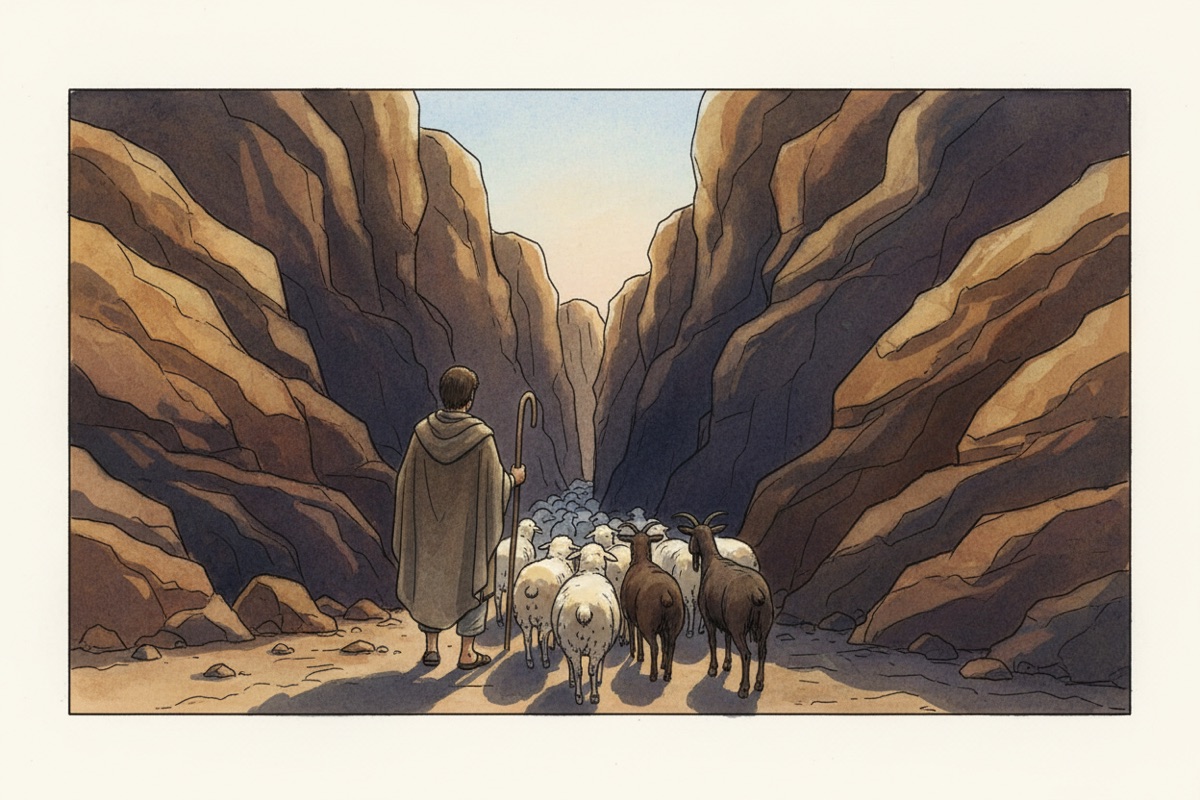
In Psalm 23, "the valley of the shadow of death" points to deep darkness and real danger, which is why some English translations render it "the darkest valley." The sheep go through it with the shepherd. The one who leads in verse 3 is still there in verse 4. What the psalm offers in the valley is presence: "You are with me."
The rod and staff were a shepherd's ordinary tools, one for driving off threats and one for guiding and steadying the sheep. They comfort because they mean the shepherd is close enough to use them.
What does the table in the presence of enemies mean?
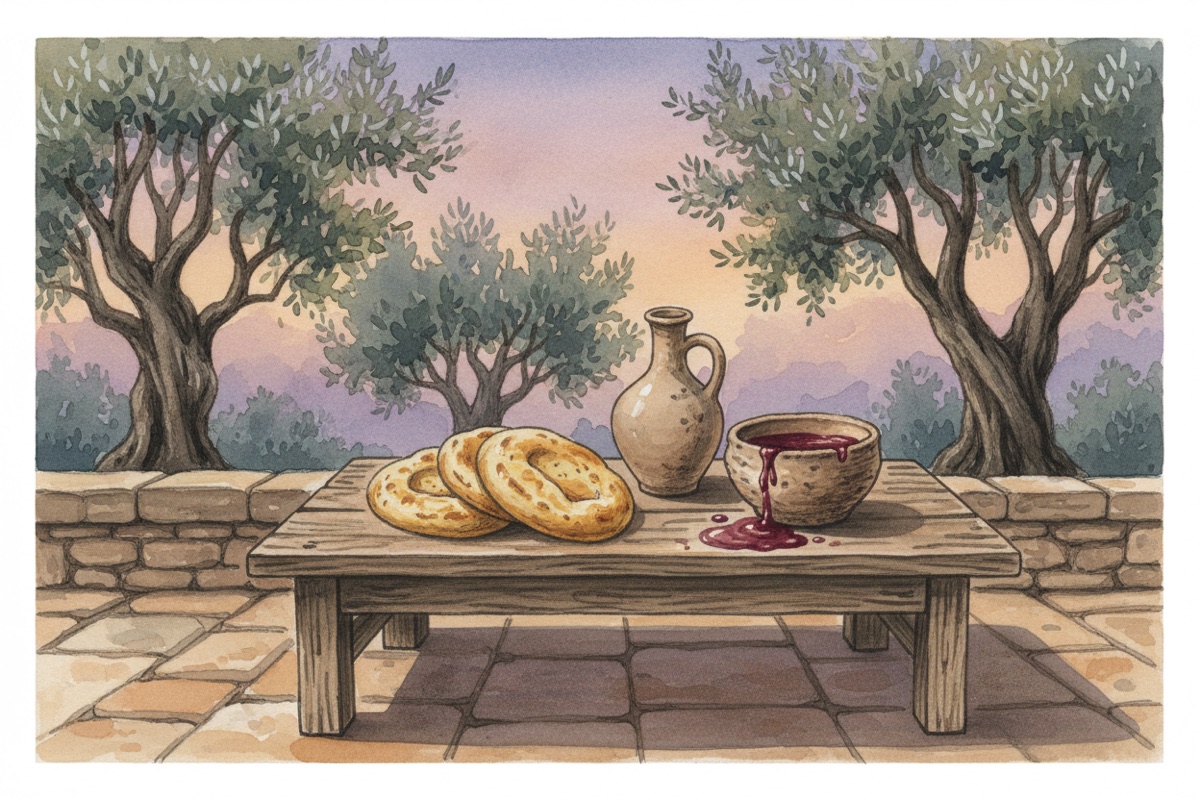
It pictures God as a host who honors you as his guest while your enemies are still in the room. In verse 5 the picture shifts from pasture to a host's table. To prepare a table, to anoint a guest's head with oil, and to fill the cup until it runs over were signs of welcome and honor. God is pictured as a generous host who treats David as a guest under his protection.
Notice where the table is set: "in the presence of my enemies." The meal is served with the enemies still watching. In a hard week, that is often how grace comes. The problem is still on the calendar, and God still feeds you.
Then comes the last verse: "Surely goodness and mercy will follow me". The Hebrew verb behind "follow" is often used elsewhere for pursuit. You have spent the week feeling chased by what went wrong. The psalm says something else is chasing you too, and it will not quit "all the days of my life".
How do you pray Psalm 23 in a hard week?
Start where David ends up in verse 4: talk to God instead of about him. You might read the psalm once as it is written, then a second time changing every "he" to "you." Stop at the line that catches. Stay there.
You do not need to feel the green pastures to pray this. David wrote the valley into the middle of the psalm.
If you are preaching this psalm soon and want help carrying it into the week, here is a way to turn Sunday's sermon into a five-day devotional.
A prayer
Shepherd, you know the week I have had. I am tired, and I have been carrying more than I was made to carry. Make me lie down. Lead me to quiet water. Restore what has worn thin in me. When the path goes dark, let me hear that you are with me, and let your rod and your staff be close enough to comfort me. Set your table even here. Let your goodness and your mercy catch up with me, today and all the days of my life.
Questions for reflection
- Where are you being asked to walk through a valley instead of around it, and what would change if you believed the shepherd is with you there?
- Which line of Psalm 23 do you find hardest to pray this week, and why?
Try Sermoneer
One sermon becomes a week of material: small group guide, devotional, social cards, and shorts.
Start free